GMP Qualification and Validation: Facilities, Systems, Equipment
Qualification and Validation for GMP: Definitions and Key Questions
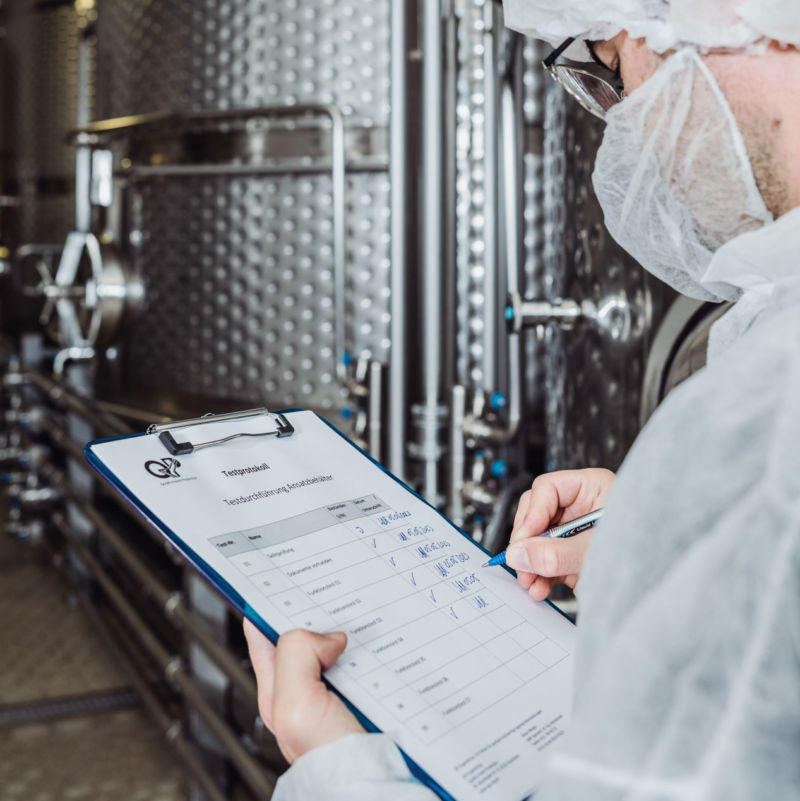
GMP qualification refers to the process of ensuring that all facilities, premises, systems, and equipment in a pharmaceutical production environment are properly installed, operated, and maintained. A GMP qualification is carried out in the following stages and answers the following questions:
A GMP validation demonstrates that a procedure is capable of consistently delivering the required quality in line with the specified requirements. Validation therefore ensures that production processes are reproducible and controllable. It can also include the validation of analytical methods and the monitoring of the production environment. A GMP validation can be carried out in various ways and answers the following questions:

End-to-End GMP Qualification and Validation
QP-Engineering offers you a complete package for the GMP-compliant qualification and validation of your facilities and processes. Our GMP specialists share their expertise and implement all steps of qualification and validation for you.
We specialize in the following areas of GMP qualification and validation:
- Customized qualification concepts
- Comprehensive risk analyses
- Clear standard operating procedures (SOPs)
- Equipment qualification (solid and liquid forms)
- Qualification of pharmaceutical water systems
- Qualification of cleanbenches, LAF (Laminar Air Flow), TAV (Low-turbulence displacement flow)
- Temperature mapping and temperature distribution measurement
- Process validation
- Cleaning validation
- Sterilization validation
- Validation of cold rooms and freezers
- Transport validation
Qualification und Validierung im Zentrum unseres Schaffens
Wir sind stolz darauf, dass wir unseren Kunden bei der GMP-konformen Herstellung von Arzneimitteln und Wirkstoffen unterstützen können. Denn wir wissen, dass eine erfolgreiche Marktzulassung und die Vermarktung der Erzeugnisse von einer einwandfreien Qualitätssicherung abhängt. Aufgrund unseres Bewusstseins, dass Qualitätsabweichungen direkte Auswirkungen auf die Gesundheit der Verbraucher haben können, arbeiten wir mit Sorgfalt an unseren Projekten.
Vorgehensweise bei der Qualifizierung
Mit einem V-Modell wird strukturiert von Spezifikation bis Verifikation vorgegangen. Die zu erstellende Dokumente werden festgelegt. Die Systemspezifikationen (nach FS, HDS, SDS, R&I- / EMSR Schema) beinhaltet die Beschreibung der technischen Ausrüstung.
Sie dient in der Designqualifizierung (DQ) als Basis für die Entwicklung, den Bau und der Installation. Die Besonderheit der FAT-/ SAT-Tests befasst sich mit der technischen Abnahme im Herstellbetrieb des Lieferanten und der technischen Abnahme nach Lieferung und Installation beim Betreiber bzw. Nutzer.
Die Installationsqualifizierung (IQ) ist die dokumentierte Beweisführung, dass die Ausrüstung in Bezug auf Identität, Installation, Richtlinienkonformität und Dokumentation die an sie gestellten Anforderungen erfüllt.
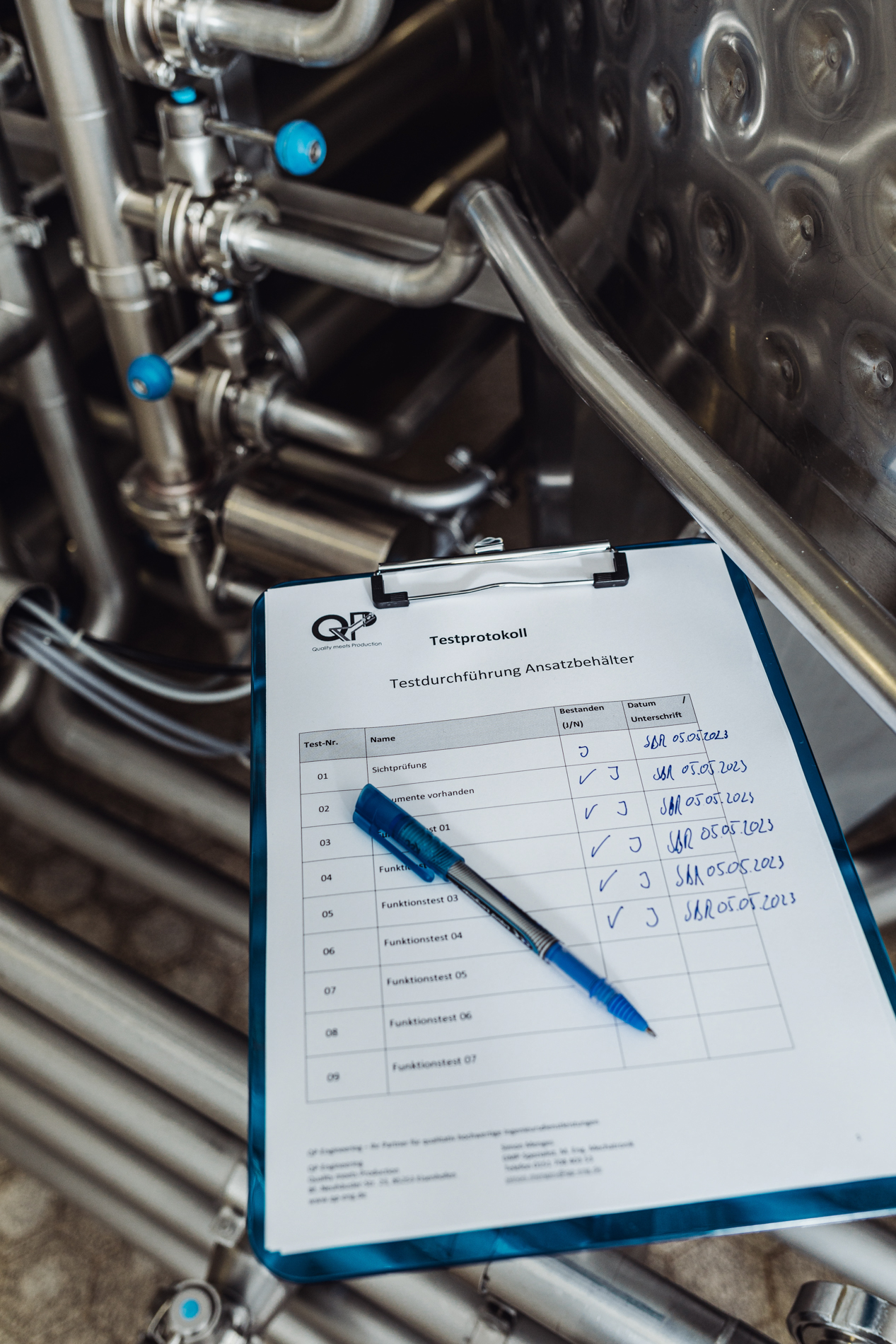
Die Funktionsqualifizierung (OQ) soll die spezifikationsgerechte Funktionsfähigkeit der Anlage/ des Systems/ des Equipments verifizieren. Dabei wird die Funktion innerhalb der zulässigen Grenzen und der Betriebsparameter getestet. Sie erfolgt anhand der vorher festgelegten Testpläne.
Dabei bildet die Risikoanalyse die Basis für den Umfang der Tests sowie für die zu verifizierenden Parameter- und Anlageneinstellungen.
Im Rahmen der Leistungsqualifizierung (PQ) ist die spezifikationskonforme und reproduzierbare Herstellung eines Produkts (bzw. Ablauf eines Prozesses) unter realen Produktionsbedingungen gefordert. Dabei werden die in der Risikoanalyse identifizierten kritischen Parameter getestet. Die Durchführung der PQ kann auch im Rahmen der Prozessvalidierung erfolgen.
GMP Qualification Using the GAMP 5 V-Model
The GAMP ("Good Automated Manufacturing Practice") 5 V-Model is an essential framework in the pharmaceutical and medical sectors for the qualification and validation of computerized systems. It provides a clear framework for ensuring product and process quality. QP-Engineering qualifies your facilities, systems, and equipment using the following steps:
- Design Qualification (DQ): Documented verification that the design complies with GMP and user requirements. This can be done, for example, in the form of documented evidence ("Design Review") by comparing the user requirement specification (URS) with the functional specification.
- Installation Qualification (IQ): Documented evidence that the equipment meets the defined requirements in terms of identity, installation, regulatory compliance, and documentation.
- Operational Qualification (OQ): Verification that the facility, system, or equipment functions in line with its specifications. Functionality is tested within the permissible limits and operating parameters, based on the predefined test plans.
- Performance Qualification (PQ): Specification-compliant and reproducible manufacturing of a product (or execution of a process) under real production conditions. The critical parameters identified in the risk analysis are tested. The PQ can also be carried out as part of the process validation.
GMP Validation with QP-Engineering
GMP validation is also part of the GAMP 5 V-Model. QP-Engineering validates your processes and systems using the following steps:
- Developing a GMP validation plan: We create a detailed plan that covers the entire validation process from start to finish, including the specific tests and procedures to be used.
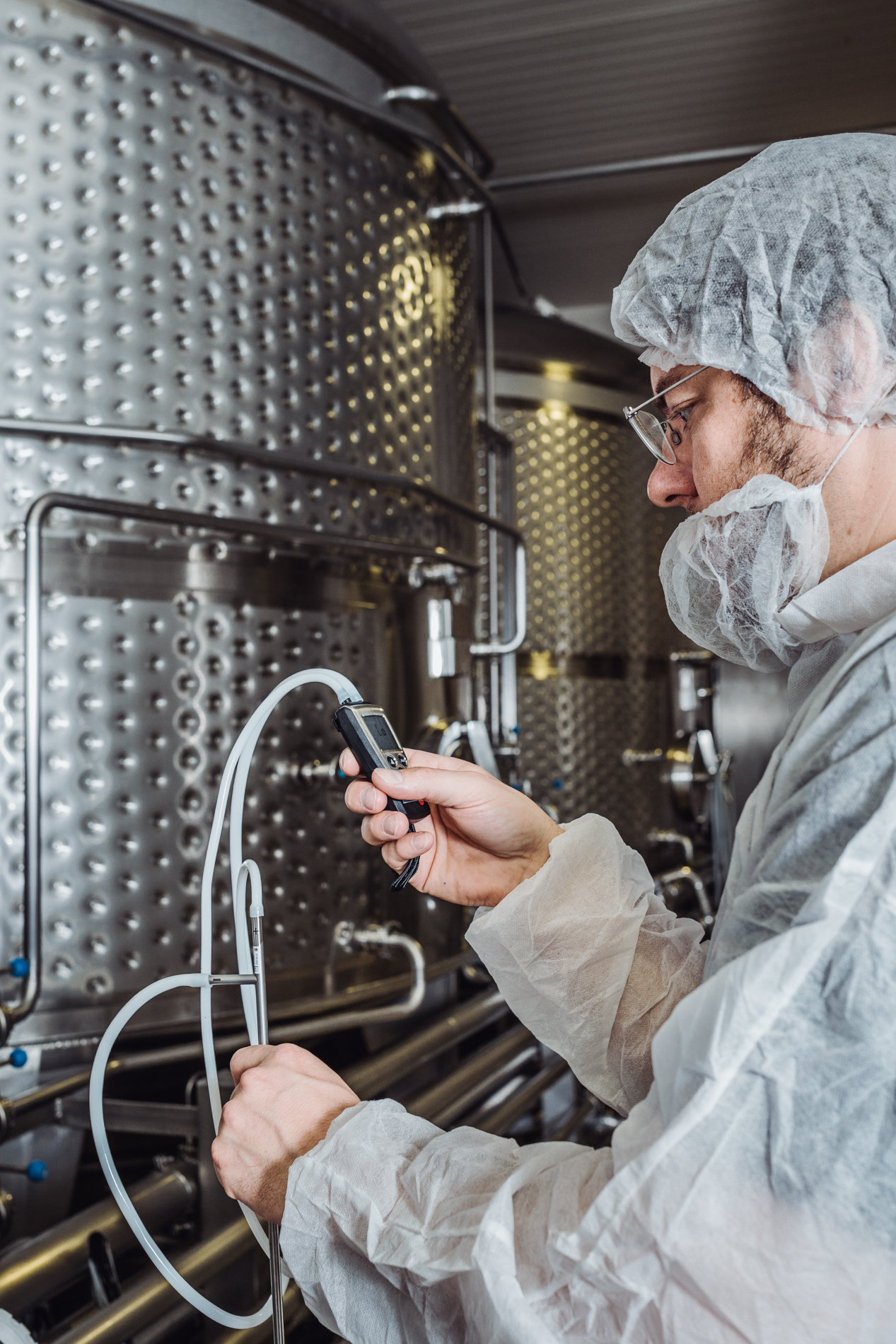
- Performing GMP validation tests: Our GMP experts carry out precise, detailed tests such as FAT (Factory Acceptance Testing), SAT (Site Acceptance Testing), and Computer System Validation (CSV) to ensure that all components function correctly and meet the specified requirements.
- GMP documentation and reporting: We carefully document the entire validation process and produce comprehensive reports that capture all tests carried out, results, and relevant data.
- Post-GMP Validation Support: After completing the validation, we remain at your disposal to ensure that your systems continue to meet the standards and to make adjustments and optimizations as needed.
Documentation in GMP Qualification and Validation by QP-Engineering
GMP-compliant documentation plays a decisive role in GMP qualification and validation. The right documentation sustainably ensures the integrity, traceability, and compliance of your processes. QP-Engineering supports you with qualification and validation documentation as follows:
QP-Engineering: Your Partner for GMP Qualification and Validation
Detailed GMP qualification and validation for your company, all from one team.
What you gain with QP-Engineering as a GMP partner:
Support for GMP-Compliant Qualification and Validation
Do you want to qualify or validate your facilities and processes? We stand by your side to guarantee that your qualification and validation are carried out in strict accordance with GMP.
How QP-Engineering supports you with GMP-compliant qualification and validation:
GMP Qualification and Validation for Pharma: Where Expertise Meets Excellence at QP-Engineering
The pharmaceutical industry is known for its strict quality standards and regulatory requirements. At QP-Engineering, we understand the uniqueness of every project and offer customized GMP qualification and validation services to meet your specific needs. Our team of experienced engineers and professionals supports you every step of the way. With us, you receive guaranteed GMP-compliant planning, implementation, as well as qualification and validation.

Frequently asked questions about GMP Qualification and Validation
A GMP qualification is the documented evidence that facilities, systems, and equipment are suitable for the production of medical products. A GMP validation is the documented evidence that a GMP process is suitable for its intended purpose and consistently delivers products of the required quality.
GMP cleanrooms, facilities, and equipment must be qualified, while GMP-compliant processes must be validated. Documented qualification and validation are typically carried out using the V-Model. This is particularly important for suppliers — any company that wants to supply pharmaceutical customers needs to have its production qualified for GMP manufacturing, along with the products themselves.
Performance Qualification (PQ) is documented evidence that all production processes meet GMP requirements in operating conditions. PQ validation is based on predefined acceptance criteria that specify which quality parameters must be met for the process to be considered validated. These criteria are normally documented in the validation plans and protocols.
GMP qualification and validation is essential in regulated industries to ensure the safety and efficacy of products and to meet regulatory requirements. It also strengthens trust among consumers and across the industry. Qualification and validation are an integral part of the quality management system in these industries, and they help your company operate successfully, safely, and sustainably.
One of the biggest challenges is the scientifically sound preparation and presentation of the results of a GMP qualification and validation. Another challenge is the correct and GMP-compliant documentation of the tests. Extensive protocols have to be maintained to trace the steps and outcomes of the processes. On top of that, compliance with regulatory requirements is critical — and these requirements can vary from country to country and change over time. QP-Engineering carries out the GMP-compliant qualification and validation carefully on your behalf, so you can focus on the success of your business.